
Pasta Production – Step by Step Process by Khan Engineering
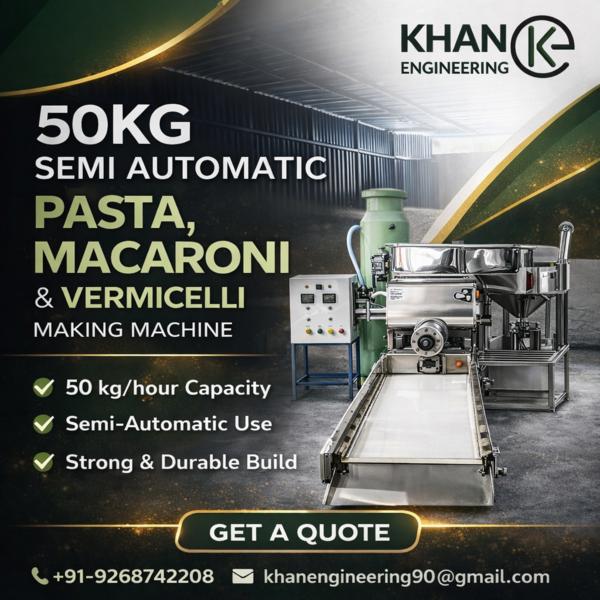
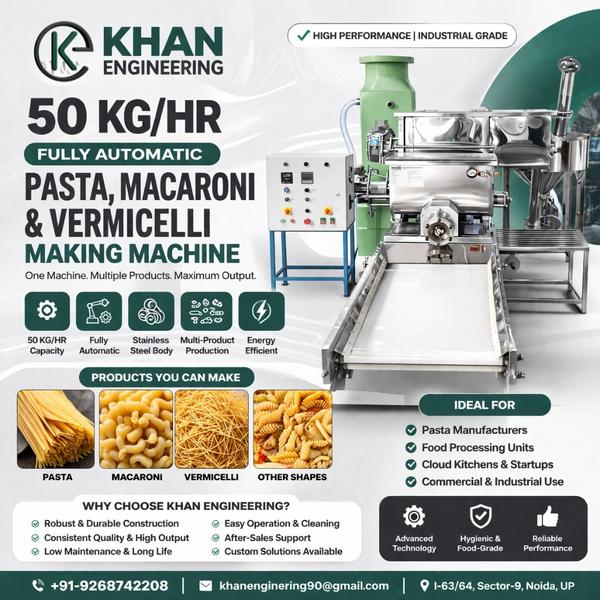
Khan Engineering offers a completely automated pasta production line that is hygienic, efficient, and high-quality. Every stage, from processing raw materials to supplying the ultimate market, is made more efficient by sophisticated machinery.
Step 1: Raw Material Feeding
The process begins with premium raw materials like suji (semolina) or maida. These are automatically transferred through a Screw Conveyor, ensuring dust-free and hygienic feeding.
Step 2: Automatic Water Supply & Online Mixing
The raw material enters the Online Mixture, where the Automatic Water Supply System adds the right amount of water. This ensures proper hydration and consistency of the dough.
Step 3: Vacuum Mixing
The hydrated dough then moves into a Vacuum Mixture. Here, excess air is removed, resulting in a smooth and elastic dough suitable for pasta extrusion.
Step 4: Extrusion & Shaping
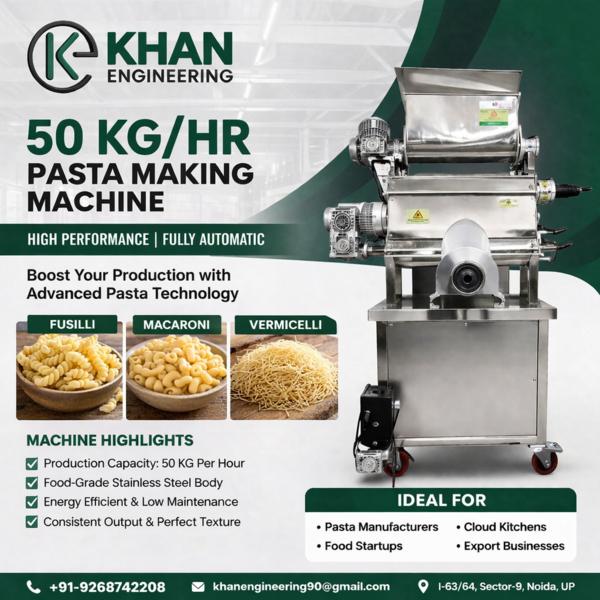
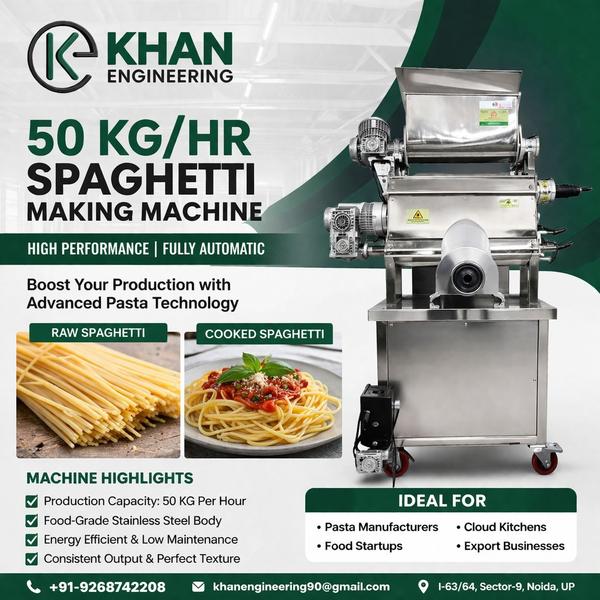
The dough passes through the Extruder Machine, where it is pressed through different Dies to form pasta shapes like macaroni, penne, fusilli, or spaghetti.
Step 5: Conveyor Belt Transfer
The shaped pasta is carried forward using a Conveyor Belt, ensuring smooth movement with minimal manual handling.
Step 6: Cooling Tower Process
Freshly extruded pasta is stabilized in the Cooling Tower, which controls the temperature before drying.
Step 7: Centralized Control Panel
The entire production line is managed via a PLC-based Control Panel, allowing operators to monitor speed, temperature, and process flow with precision.
Step 8: Wooden Trays & SS Trolleys Collection
The pasta is collected in Wooden Trays and organized in SS Trolleys, ready to be shifted for drying.
Step 9: Batch Drying
The trolleys are placed into a Batch Dryer, where the pasta is dried for 6–7 hours. This process removes excess moisture and ensures a longer shelf life.
Step 10: Quality Inspection
After drying, the pasta undergoes quality checks for texture, shape, and moisture levels to meet industry standards.
Step 11: Pneumatic Packing Machine
The final product is packed using a Pneumatic Packing Machine in airtight, food-grade packaging. This protects pasta from contamination and keeps it fresh.
Step 12: Storage & Market Supply
Packed pasta is stored in a clean warehouse and distributed through wholesalers, retailers, and direct supply channels, making it ready for the market.
Grow your pasta business with Khan Engineering’s advanced, fully automated machines – Call us now for a customized solution!
Call/whatsapp:- +91-9268742208