
A macaroni line does more than push dough through a hole: it hydrates semolina, removes air, builds pressure, forms a hollow tube, cuts it, and then removes moisture in controlled stages. By following each stage and its measurable process signals, you can understand why macaroni cracks, flattens, sticks or varies in length—and what a commercial line must control to produce shelf-stable pasta.
Key takeaways
- Dose water at about 28–32% of semolina weight for stiff extrusion dough.
- Match the die, screw speed, and cutter timing to the macaroni shape.
- Dry pasta in controlled stages to prevent cracks, deformation, and spoilage.
- Specify utilities, floor space, commissioning, and after-sales support before installation.
From Semolina and Water to Extrusion-Ready Dough
A reliable macaroni dough starts with consistent dosing, not with the extruder. Screen durum-wheat semolina to remove lumps, then meter water at about 28–32% of flour weight. This low hydration produces a stiff, crumbly mass rather than bread-like dough; excess water makes it sticky and can distort hollow shapes.
Mixing must wet every semolina particle. Give the batch enough residence time for water to penetrate, because dry cores create white specks, weak pieces and unstable die pressure. Keep semolina quality, water temperature and dough residence time consistent between batches.
Before forming, allow brief resting or apply vacuum treatment. Vacuum removes entrained air and helps create a dense, continuous feed; trapped air can cause rough surfaces, voids and fluctuating pressure. The dough should reach the screw as a uniform, cool crumbly mass, not a sticky paste.
The commercial macaroni production steps for dough preparation are:
- Screen and dose semolina
- Dose water and permitted ingredients
- Mix and hydrate
- Rest or apply vacuum
- Feed the screw for extrusion
Check the product standard, permitted ingredients, hygiene controls, labelling and licensing against current Food Safety and Standards Authority of India requirements. The macaroni extrusion process forms the product rather than cooking it; staged drying later removes moisture and stabilises the pieces.
How the Screw, Die and Cutter Create Hollow Macaroni
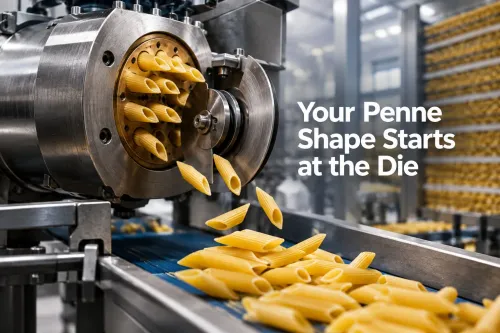
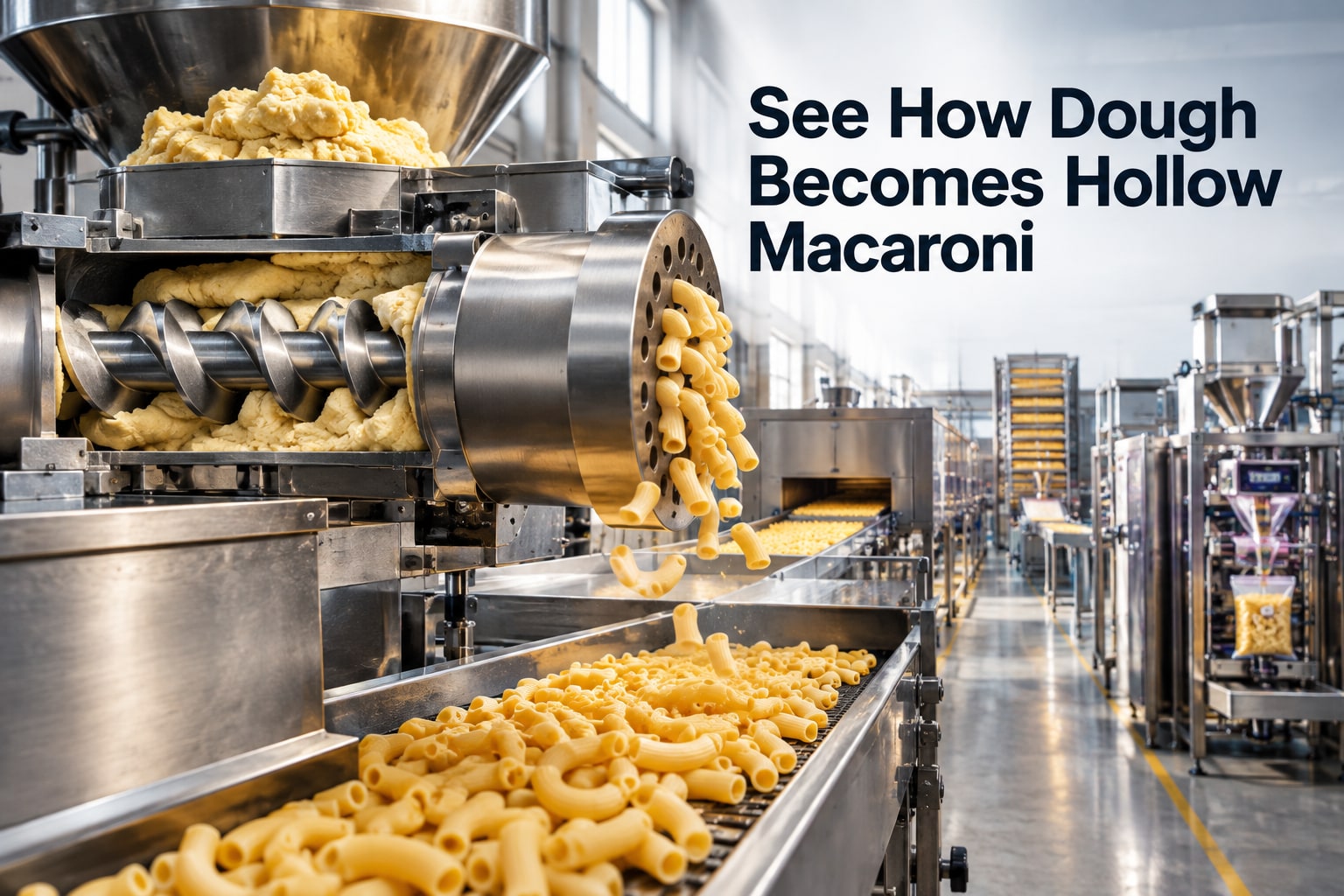
The bore is set at the die, not drilled into solid pasta afterward. The practical answer to “how a macaroni extruder machine for works” is pressure shaping: the screw compresses hydrated semolina, forces it through an annular opening, and the central pin creates the hollow centre.
1. The screw conveys dough through the barrel, reducing voids and building steady die pressure. Its compression ratio, speed and feed rate control throughput; pressure fluctuations produce changing diameter, rough surfaces or irregular wall thickness.
2. The die contains an annular channel around a central mandrel or pin. Dough flows through that ring to form the tube, while the mandrel establishes bore diameter. In dies with a vented core, the air passage prevents the centre from collapsing as the tube leaves the die.
3. Wall thickness depends on the gap between the outer die opening and the central pin, adjusted by tooling and stabilised by dough pressure, temperature and moisture. Excess water softens the tube; dry dough raises drive load and can leave poor die fill.
4. A rotary knife cuts the continuous tube at the die face. Cutter speed relative to extrusion speed sets piece length, while a sharp, correctly aligned blade produces square ends instead of crushed or ragged ones.
During macaroni extruder machine operation, monitor pressure and dough temperature together. A rising pressure trend points to restricted tooling, poor hydration or foreign material; excessive heat changes flow and can damage the surface before drying begins.
What Happens After the Die: Pre-Drying, Drying and Packing
Freshly cut macaroni is not cooked and shelf-stable; it is still wet, flexible and vulnerable to deformation. The macaroni extrusion process mainly forms the dough, while controlled drying removes moisture and builds the firm structure needed for storage.
The commercial macaroni production steps after cutting are:
- Pre-drying sets the outer surface so pieces do not stick together or collapse. Airflow and temperature must remove surface moisture without sealing the outside while the centre remains wet.
- Staged drying gradually draws moisture from the tube wall and hollow core. Excessive heat can create a dry shell around a damp centre, leading to cracks, bending or mould growth later.
- Cooling and equalization allow moisture to redistribute through each piece. Skipping this stage can produce packets containing both brittle macaroni and wet pieces, even when the batch average looks acceptable.
The line then checks final moisture, normally targeting about 12–13% for shelf-stable packaged pasta. Test samples from different trays or zones, because a compliant average can hide wet pieces that spoil and dry pieces that fracture.
Packing begins only after the product has cooled and stabilized. Use clean, dry packaging with a reliable seal and protection against ambient humidity; otherwise macaroni can regain moisture during storage. In Mumbai, size the dryer, ventilation and humidity control for the factory’s actual warm, humid conditions rather than a temperate-climate assumption.
Operating the Line and Correcting Common Defects
Start with a validated recipe and a clean, correctly fitted die. Macaroni extruder machine operation becomes unstable when semolina or water varies, so record the lot and use the approved hydration and temperature settings rather than copying another line’s values.
1. Start the mixer and vacuum system, then feed hydrated dough at low rate. Increase screw speed gradually while checking die pressure and drive load against the recipe. Confirm that the cutter produces the specified length before raising output.
2. Monitor pressure, barrel temperature and product appearance continuously. A rising load signals restricted flow or dry dough; a sudden pressure drop points to poor feeding, a leak or an incompletely filled die.
3. Stop by reducing feed first, then emptying the screw at controlled speed. Shut down heating and auxiliaries only after pressure falls to zero, and isolate electrical power before opening guards.
4. Clean immediately after isolation. Remove dough from the hopper, barrel entrance, die and cutter; dismantle product-contact parts, wash them with the approved method, inspect holes and cutting edges, then dry every surface before reassembly.
Trace defects from the product back to the last changing condition:
- Rough or cracked macaroni: check hydration, semolina particle size, damaged starch, die scratches and excessive residence time.
- Soft, smeared surfaces: check dough temperature and over-wet mixing; excessive heat changes flow and can cause premature cooking.
- Uneven bore or wall: inspect die blockage, wear, vacuum performance and feed consistency.
- Variable length: check cutter speed, knife clearance and extrusion rate.
- Breakage after drying: check dough strength, drying severity and incomplete equalization before packing.
Planning a Macaroni Extrusion Installation in Mumbai
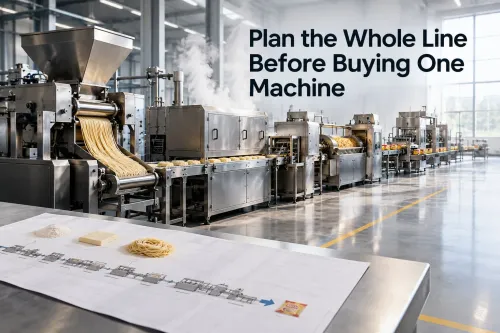
Reserve the drying and cooling area before buying the extruder. The macaroni machine process in Mumbai is not a different forming method, but Mumbai’s heat and humidity affect drying time, final moisture and condensation. Ask the supplier to size the dryer and HVAC from measured seasonal ambient conditions, not from a temperate-climate design.
Confirm these utilities on the equipment drawing:
- Three-phase electrical supply, connected load, control voltage, earthing and protection for the extruder, dryer, pumps and conveyors.
- Potable water with a defined pressure and filtration point for dosing and cleaning.
- Floor drains, washable floors and a drainage route that does not cross finished-product traffic.
- Ventilation and humidity control around the dryer, cooling and packing areas.
- Compressed air specifications if cutters, valves or packing equipment use pneumatics.
Keep semolina receiving and screening away from packing, and provide straight access for ingredient handling and finished-product removal. Leave working clearance around the die, cutter, mixer and electrical panels; cramped access turns a routine die change into extended downtime. Provide a controlled equalization area before packing so moisture does not migrate inside sealed macaroni.
Before placing an order, require:
- A layout showing utility connection points, access clearances and maintenance zones.
- A factory acceptance test using your semolina, target shape and output.
- Written limits for moisture, bore, wall thickness, length and electrical load.
- Installation, operator training, spare-parts and response commitments.
Khan Engineering and Foods Processing Machine should document these acceptance checks rather than rely on a machine label or a claimed FSSAI-ready design; you remain responsible for FSSAI licensing, hygiene, permitted ingredients and labelling.
Related products
 | The Macaroni Extruder Machine is a high-performance, automated system designed for producing macaroni and other pasta products. View product → |
 | Macaroni Making Machine 50 Kg Pasta Macaroni Making Machine ₹600000 Our Macaroni Making Machine is designed for high-efficiency pasta production, offering seamless operation for continuous output. View product → |
Frequently asked questions
How much water does macaroni dough need before extrusion?
Start with water at about 28–32% of flour weight. The mixture should remain stiff and crumbly rather than becoming sticky like bread dough.
How does a macaroni extruder create hollow pasta?
The screw compresses and pushes dough through a shaped die. A die insert forms the central opening, while the cutter controls tube length.
What happens after macaroni leaves the die?
The line cuts the fresh pasta, removes surface moisture during pre-drying, completes drying under controlled conditions, and transfers the product for packing.
Which defects should operators check during macaroni extrusion?
Check for flattened tubes, blocked centres, rough surfaces, cracks, sticking, uneven lengths, and moisture variation. Correct dosing, dough mixing, die condition, pressure, speed, and drying settings.
Related products
 | Pasta Extruder Machine The Pasta Extruder Machine is designed for efficient pasta production, offering high-quality and consistent results. View product → |
 | Pasta Making Machine Automatic Pasta Making Machine Simplify pasta preparation with the Automatic Pasta Making Machine. Designed for convenience, it mixes, kneads, and extrudes fresh pasta in minutes. View product → |
 | Pasta Making Machine Fully Automatic Pasta Making Machine The Fully Automatic Pasta Making Machine simplifies the art of pasta preparation. View product → |
 | Pasta Machineries 2000kg/hr Pasta & Macaroni Making Machine – Industrial-Scale Production with Precision Khan Engineering’s 2000kg/hr Pasta Making Machine is a fully... View product → |