
Starting a commercial pasta manufacturing business requires the right combination of processing, extrusion, drying, and packaging equipment. The machinery you need depends on the type of pasta you want to manufacture, your expected production capacity, available space, and the level of automation required.
For businesses planning commercial-scale production, a pasta making machine or complete automatic pasta production line can help maintain consistent product quality, production speed, and uniform pasta shapes. Khan Engineering provides pasta processing machinery designed for different production requirements and pasta varieties.
What Machines Are Needed for a Pasta Manufacturing Plant?
A commercial pasta manufacturing setup generally includes several stages, beginning with raw material preparation and ending with finished-product packaging. Depending on the production capacity, manufacturers may use individual machines or integrate multiple machines into a complete production line.
The main equipment can include a flour or semolina handling system, dough mixing machine, pasta extruder, pasta cutting system, drying equipment, cooling system, and packaging machine. Additional equipment can be incorporated depending on the type of pasta being produced.
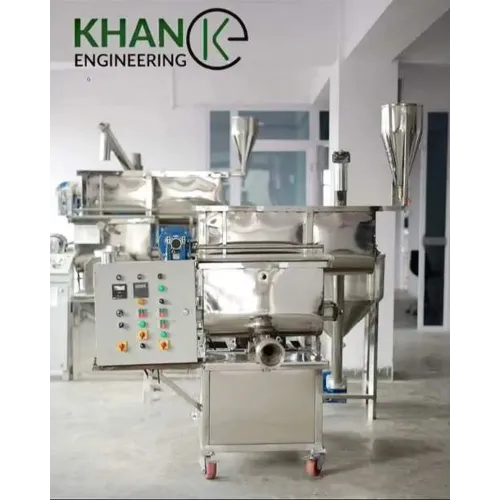
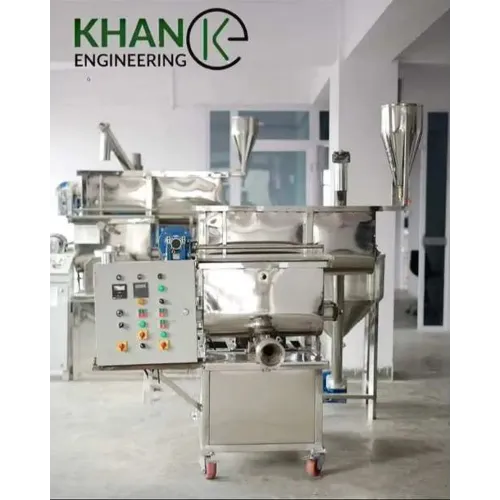
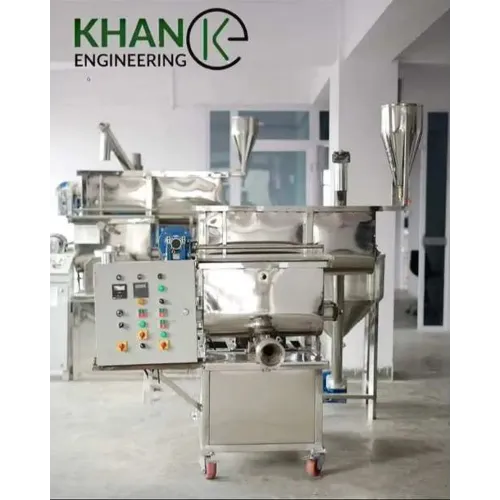
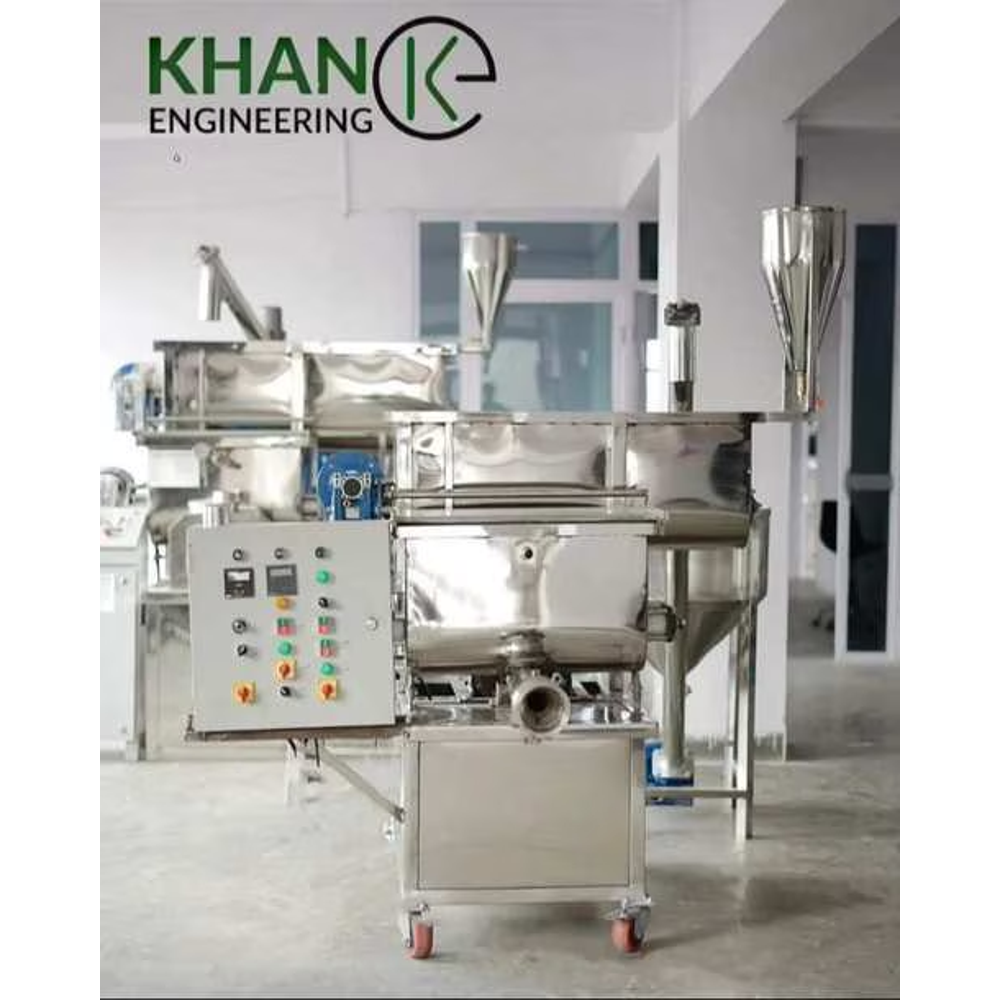
Pasta Dough Mixing Machine
The manufacturing process starts with preparing a consistent dough mixture. A commercial dough mixing machine combines semolina or suitable flour with water and other required ingredients to achieve the desired dough consistency.
Uniform mixing is important because inconsistent dough can affect extrusion, shape, texture, and final product quality.
Pasta Extruder Machine
The pasta extruder is one of the most important machines in commercial pasta manufacturing. It processes the prepared dough and forces it through specially designed dies to create different pasta shapes.
Depending on the die and machine configuration, manufacturers can produce products such as macaroni, penne, spaghetti, fusilli and other pasta varieties.
For businesses manufacturing multiple products, selecting an extruder compatible with different dies can provide greater production flexibility.
Pasta Cutting System
Certain pasta varieties require precise cutting after extrusion. A cutting system can control the length and shape of the pasta according to the required product specification.
Accurate cutting helps maintain consistency between batches and reduces variations in finished-product size.
Pasta Drying Machine
Freshly extruded pasta contains considerable moisture and normally needs controlled drying before packaging. Industrial pasta drying equipment reduces moisture under controlled temperature and airflow conditions.
Proper drying is important for achieving the desired shelf stability, texture, and storage characteristics of the finished pasta.
Pasta Cooling System
After drying, pasta may require controlled cooling before it moves to the packaging stage. Cooling helps bring the product to a suitable temperature for handling and packing.
In an automated production setup, the cooling stage can be integrated with other processing equipment to create a continuous manufacturing workflow.
Pasta Packaging Machine
The final stage is packaging. Depending on the product and market requirements, manufacturers can use suitable weighing, filling, sealing, and packaging equipment.
Automated packaging can improve production efficiency and provide more consistent pack weights while reducing manual handling.
Do You Need a Complete Pasta Production Line?
Not every business needs the same machinery configuration. A small commercial manufacturer may begin with selected processing and extrusion equipment, while a larger manufacturer may require a complete automated pasta production line.
A complete line can connect multiple stages of production, helping reduce manual intervention and creating a more systematic manufacturing process.
The right configuration should be selected according to production capacity, pasta varieties, factory space, automation requirements, investment plans, and future expansion.
How to Choose the Right Pasta Machine Capacity?
Production capacity is one of the most important factors when selecting pasta machinery. A manufacturer supplying local markets may have different requirements from a large food-processing company supplying distributors across multiple regions.
Before purchasing equipment, calculate your expected daily production, number of operating hours, required pasta varieties, packaging requirements, and future production growth.
Choosing machinery only according to the current requirement may create limitations when demand increases. Therefore, manufacturers should also consider scalability when designing their pasta production setup.
What Types of Pasta Can Be Manufactured?
Modern pasta extrusion systems can be configured for different shapes by using appropriate dies and accessories. Depending on the machin