
The right packaging machine depends on more than whether your product is called a snack, pasta or powder. Match the product’s flow, density, fragility, moisture and target pack format to the dosing system, wrapper and site conditions, then verify the choice with a product-and-film trial rather than a headline speed.
Key takeaways
- Match the dosing system to flow, bulk density, particle size and product fragility.
- Choose VFFS, HFFS or premade-pouch equipment after defining the pack format.
- Specify film, seal design and sealing conditions as one packaging system.
- Compare saleable output after changeovers, rejects, downtime and product loss.
Match the Product to the Correct Dosing and Filling System
The product’s flow, bulk density, particle size and fragility determine the dosing system; the bag-forming machine comes after that decision. For anyone asking which packaging machine for food products in Mumbai, compare food packaging machine types by how accurately and gently they handle the product.
| Product | Suitable dosing system | Packaging-machine fit |
|---|---|---|
| Rice, pulses, granules and snack pellets | Multihead weigher or volumetric cup filler | VFFS for pillow or gusseted bags |
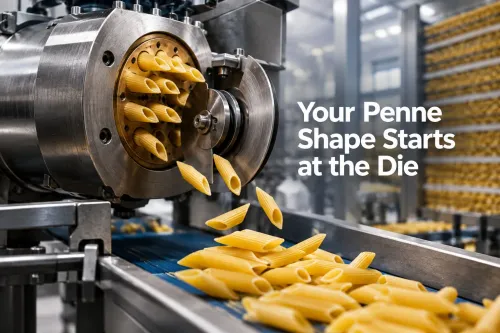
| Pasta, macaroni and namkeen | Multihead weigher with gentle discharge | VFFS for weighed portions and repeatable pack weights |
| Noodles and long, fragile pieces | Linear or multihead weigher with wide product lanes | VFFS or premade-pouch machine with reduced drop height |
| Cohesive flour, spice and protein powders | Servo auger filler | VFFS or premade-pouch machine; avoid ordinary weighers |
| Sugar, salt and free-flowing powder | Auger or volumetric cup filler | VFFS when dust control and consistent dosing are proven |
| Oil, sauce and liquid products | Pump, piston or mass-flow filler | HFFS, premade-pouch or bottle-filling equipment |
| Sticky paste, chutney and thick sauces | Servo piston filler | Premade-pouch or HFFS equipment with controlled filling |
A multihead weigher-fed VFFS machine suits dry, free-flowing products, but oil, moisture or powder contamination can weaken seals. Require a trial using the exact product, laminate and pouch dimensions, then record net-weight variation, rejected packs, leak or seal-strength results, film usage and sustained output. Include changeover time if you run multiple SKUs.
Choose Between VFFS, HFFS and Premade-Pouch Equipment
A roll-film machine suits products that need low material cost and steady, repeatable pouch production. A horizontal wrapper suits fragile or individually presented pieces. A premade-pouch machine suits packs where appearance, resealing or unusual shapes justify buying the pouch separately.
| Equipment | What it does | Choose it when |
|---|---|---|
| VFFS | Forms, fills and seals pouches from roll film | You pack powders, granules, namkeen, pasta or noodles in repeated sizes and want lower packaging-material cost |
| HFFS | Wraps and seals product horizontally in film | Biscuits, bars, bakery products or frozen items need gentle transfer, controlled placement or a pillow-style pack |
| Premade-pouch machine | Opens, fills and seals purchased pouches | You need zippers, spouts, special shapes or a more finished appearance, and accept higher pouch cost |
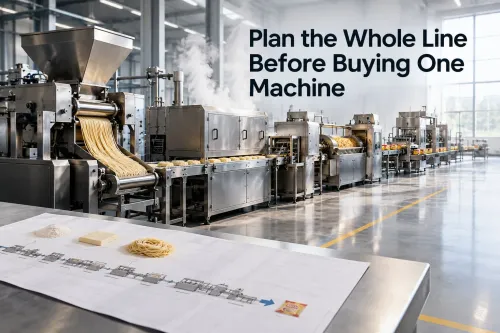
To choose packaging machine equipment, define your pack weights, hourly demand, number of SKUs, pouch style, product fragility and changeover frequency.
A VFFS line becomes a poor choice when irregular pieces bridge the forming tube or oil contaminates the vertical seal; an HFFS line becomes harder to justify when floor space and frequent size changes are limited.
Request a trial using the actual product, pouch dimensions and food-contact laminate. Confirm seal strength after powder, oil or sauce reaches the seal area, not only after a clean dry run. Include Mumbai’s electrical supply, compressed-air quality, washdown method, humidity control and corrosion protection in the specification.
Select the Pack Format, Film and Sealing Specification Together
A three-sided pillow pouch, centre-seal bag, flat-bottom pack or premade stand-up pouch demands a different forming and sealing arrangement. Decide the pouch style before you choose packaging machine, because the format controls film tracking, forming-collar size, jaw movement, gusseting, zipper handling and changeover time.
VFFS from rollstock suits standard pillow or gusseted bags and can reduce packaging-material cost. Premade-pouch equipment supports stand-up bags, zippers, spouts and shaped pouches, but purchased pouches cost more and require accurate pouch dimensions.
| Option | Film and machine implication | Check before purchase |
|---|---|---|
| VFFS rollstock | Printed laminate needs registration marks, correct unwind direction and a compatible forming tube | Test every pouch size and artwork repeat |
| Premade pouch | Pouch thickness, opening width, zipper and spout determine gripper and opening settings | Run the exact purchased pouch |
| Horizontal wrapper | Heat-seal film and product length determine fin and end-seal geometry | Check seal area and cutting accuracy |
Specify these together with the supplier:
- Film structure, sealant layer, thickness, laminate adhesive and intended food-contact surface
- Pouch dimensions, net weight, declaration area and coding position
- Sealing temperature, jaw pressure, dwell time and allowable product contamination
- Leak-test method and acceptance limit
FSSAI packaging rules require food-contact material to be food grade, clean, hygienic, tamper-proof and suitable for its use; printed surfaces must not touch food. For fried snacks, specify nitrogen purity, flush arrangement, bag volume and target residual oxygen. Nitrogen cannot compensate for a contaminated or weak seal.
Test the automatic food packaging machine with the actual product and laminate, not only an empty dry pouch.
Calculate Saleable Output Instead of Buying on Nominal Speed
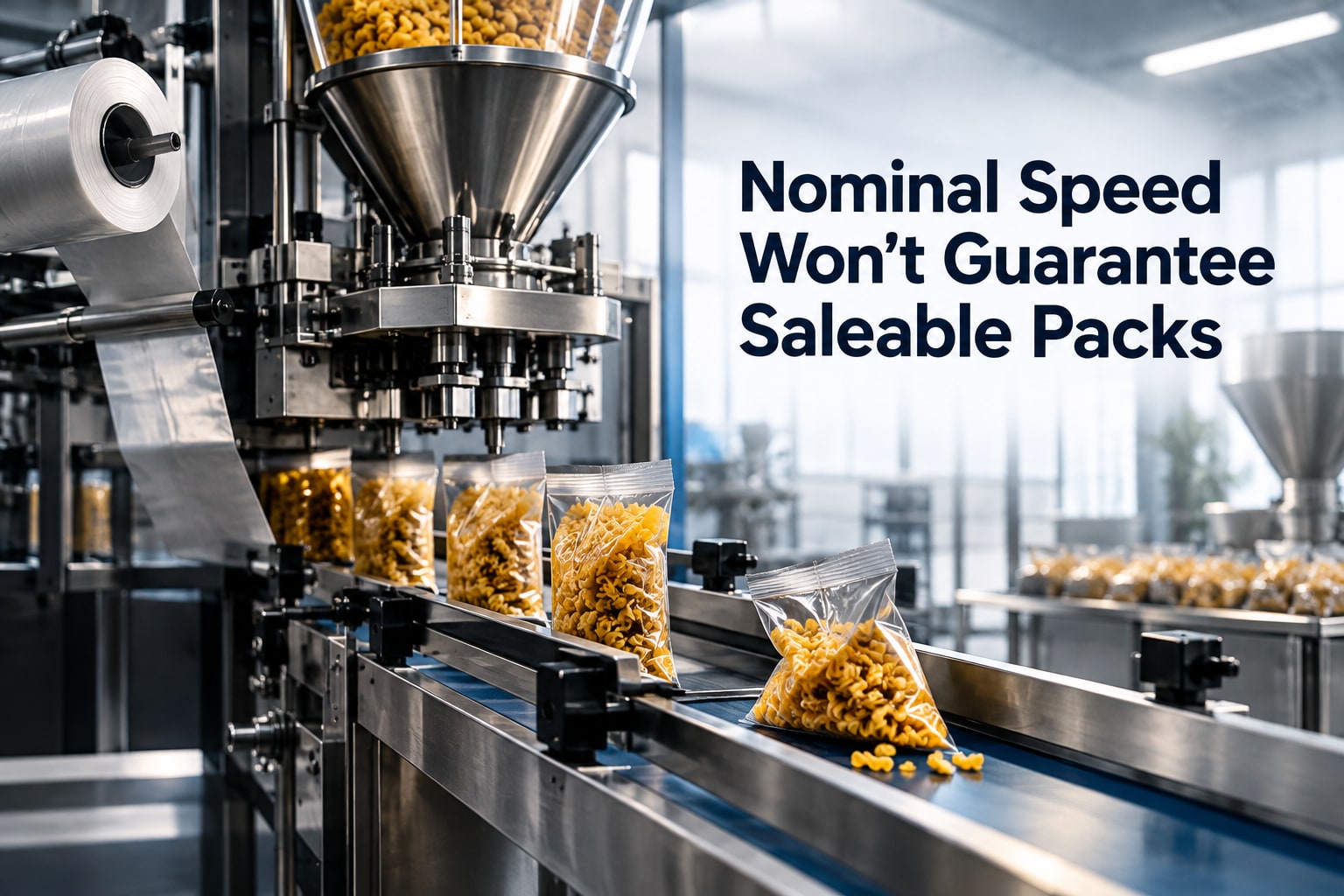
A line rated at 100 packs per minute does not deliver 100 saleable packs per minute. Weighing pauses, product settling, film tracking, seal faults, coding errors and downstream congestion reduce the number that reaches the carton.
Calculate demand before comparing quotations:
- Required saleable rate = required packs per hour ÷ planned running hours per hour.
- Required machine rate = required saleable rate ÷ expected good-pack yield.
- Daily demand = cases required × packs per case, including the busiest production day rather than the monthly average.
- Usable hours = shift hours minus cleaning, film loading, changeovers, planned maintenance and breaks.
If you need 24,000 acceptable packs in an eight-hour shift but only run for six productive hours, the target is 4,000 saleable packs per hour, or 67 per minute. At a 90% good-pack yield, specify at least 75 packs per minute before allowing future demand.
Ask for a product-and-film trial, not a brochure speed. Record net-weight variation, reject rate, seal strength or leak-test results, coding quality, film consumption, changeover duration and sustained output during a representative run.
Include the weigher or filler, bagger, coder, checkweigher, metal detector, reject unit and case packer; a fast bagger cannot compensate for a slower infeed or manual case-packing bottleneck.
This is the practical test for which packaging machine for food products in Mumbai, including an automatic food packaging machine, will produce saleable output rather than an impressive nominal number.
Test the Machine for Mumbai’s Product, Plant and Compliance Conditions
A 30-minute dry run proves almost nothing. Before you choose a packaging machine, give the supplier your product’s bulk density, particle-size range, oil or moisture content, target weights, pouch dimensions, film structure, SKU count, hourly demand and cleaning method.
Ask the packaging machine supplier in Mumbai to record these results using your actual product, laminate and artwork:
1. Net-weight variation and the reject rate across a representative production run, not just the stated packs-per-minute speed.
2. Seal strength or leak-test results after powder, oil, sauce or crumbs reach the seal area. Confirm the sealing temperature, jaw pressure and dwell time used.
3. Film consumption, changeover time between SKUs, stoppage reasons and sustained saleable output. A fast machine that wastes film or needs constant adjustment is not fast in your plant.
4. Coding quality and print position for the product name, net quantity, manufacturer or packer details, MRP and consumer-care information. Keep printed surfaces away from food-contact areas as required by FSSAI packaging rules.
5. Cleanability of stainless-steel contact parts, lubricant controls, removable components and compatibility with your sanitation chemicals. Ask what happens to the warranty if you use your planned washdown process.
Khan Engineering and Foods Processing Machine can be evaluated on the same evidence: request a product-and-film acceptance trial before treating a quotation as comparable. Reject any proposal that offers only catalogue speed without measured weights, seals, waste, changeover and compliance checks.
Related products
 | Packaging Machine The Snacks Packaging Machine offers high efficiency in packaging a variety of snack products. View product → |
 | Packing Machine Precision Packaging for Every Business Khan Engineering offers high-quality Automatic Packing Machines designed for fast, accurate, and reliable... View product → |
Frequently asked questions
How do you match a food product to the correct dosing and filling system?
Assess the product’s flow, bulk density, particle size and fragility first, then select a dosing system that delivers accurate, gentle filling.
What is the difference between VFFS, HFFS and premade-pouch equipment?
VFFS forms, fills and seals a bag from film on the machine; HFFS forms packs horizontally; premade-pouch equipment fills and seals bags made in advance.
Why must pack format, film and sealing specifications be selected together?
The pouch shape, film structure and seal design affect forming, filling, sealing performance and pack integrity, so they must be tested as one system.
How should you compare packaging machine output?
Compare saleable output rather than nominal speed by accounting for changeovers, rejects, downtime, product loss and the actual operating conditions of your plant.