
A finished snack depends on more than hot oil: raw-material moisture, piece size, feed rate, residence time, de-oiling and cooling all affect crispness, colour and oil uptake. By following the process from preparation to packaging, you can define a workable recipe, compare fryer quotations and identify the controls needed for consistent output.
Key takeaways
- Standardise piece size and remove surface moisture before frying.
- Set oil temperature and residence time for the snack, not by guesswork.
- Filter oil, control turnover and remove excess oil before cooling.
- Verify fryer capacity, temperature control, safety systems and test results before buying.
How raw materials are prepared before they enter the fryer
A fryer machine production process for snacks starts with uniform pieces, not hot oil. Uneven thickness, excess surface water and loose flour cause splashing, patchy colour, oil uptake and inconsistent cooking.
1. Wash potatoes thoroughly, peel when the product requires it, and remove green or damaged areas. Slice or cut them to a consistent thickness, then rinse away loose surface starch. Blanch or wash further when needed to control reducing sugars and acrylamide formation; drain and pre-dry the pieces before feeding.
2. Control dough moisture during mixing and kneading. Rest it if the recipe requires hydration to equalise, then sheet, extrude or cut it into uniform shapes. Remove cracked pieces and excess dusting flour, because fines burn quickly and darken the oil.
3. Sieve gram flour before mixing to remove lumps. Prepare the batter or dough at a repeatable water level and viscosity, then form sev, boondi or other pieces to the specified size. Let excess batter drain from formed pieces before they reach the fryer; loose flour otherwise creates sediment and foaming.
4. Extrude snack dough through the correct die, cut pieces to a consistent length, and dry them to the recipe’s target moisture. Screen out oversized pieces, undersized pieces and fines. Pieces with different bulk density or moisture finish at different times, so mixing them in one feed produces pale centres beside over-browned surfaces.
Keep prepared material covered and feed it steadily. A stable feed rate lets the fryer maintain residence time, oil temperature and product load.
How to set frying conditions for a cooked, crisp snack
Set oil temperature, residence time and feed load together; changing one changes cooking, colour and oil uptake. Snack frying commonly runs at 160–190 °C, but the correct set point depends on the product’s inlet moisture, thickness and target final moisture.
1. Measure incoming moisture and keep it consistent. Water leaving the piece as steam creates porosity and a dry crust, while excessive moisture needs more residence time. A wet feed can leave the centre undercooked when the surface is already brown.
2. Match residence time to thickness. Thin slices and small extruded pieces cook quickly; thick dough pieces need slower conveyor speed or longer immersion. Too little time leaves a soft centre, while too much time causes dark colour, breakage and excessive oil absorption.
3. Set the temperature for the piece, not the oil alone. Excessive heat browns the surface before the centre cooks. Low heat slows moisture removal, producing a pale, greasy snack.
4. Control loading by kilograms per hour and by the product’s bulk density. Overloading drops oil temperature, blocks circulation and increases residence-time variation. Feed evenly so pieces do not touch, clump or emerge with different moisture levels.
5. Set oil depth to maintain full, stable contact around the product without submerging it beyond the fryer’s circulation design. Check temperature at several points, then record residence time, outlet moisture, colour and oil uptake. This is the measurable industrial fryer machine process—not a nominal setting copied between products.
What happens during batch and continuous frying
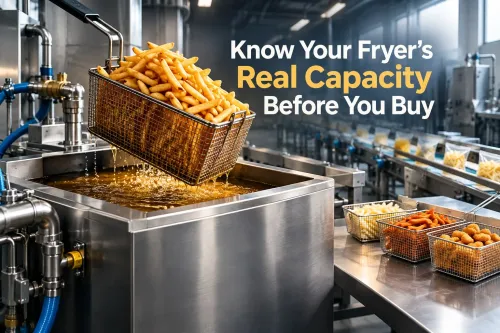
A batch frying process loads a measured quantity into a vat, holds it through the cooking cycle, lifts or discharges it, and drains the oil before the next load. The operator controls each recipe separately, which helps when piece size, dough moisture or feed shape changes between products.
| Option | Movement | Heating and draining | Unloading and best use |
|---|---|---|---|
| Batch fryer | A basket, hinged screen or submerged conveyor holds one measured load. | Oil heats the full load during a set residence time; lifting the basket or tilting the vat starts drainage. | Remove the drained snack as one lot. Choose it for variable recipes, uneven shapes, frequent changeovers, or small and mid-scale output. |
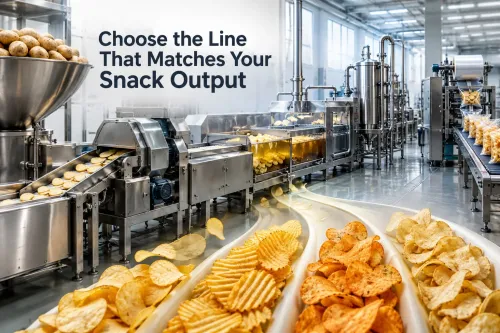
| Continuous fryer | A belt, paddle or perforated conveyor carries pieces through the oil at a controlled speed. | Burners or electric heaters replace heat lost to evaporation and exhaust; circulation keeps temperature even, while the belt lifts pieces through a drain zone. | Discharge a steady stream into a de-oiler. Choose it for consistent products and high, repeatable throughput. |
Continuous frying needs matched feeding. An overloaded belt lowers oil temperature, extends cooking unevenly and produces pale pieces beside burnt ones. A feeder meters the prepared snack into the inlet, while the conveyor speed sets residence time.
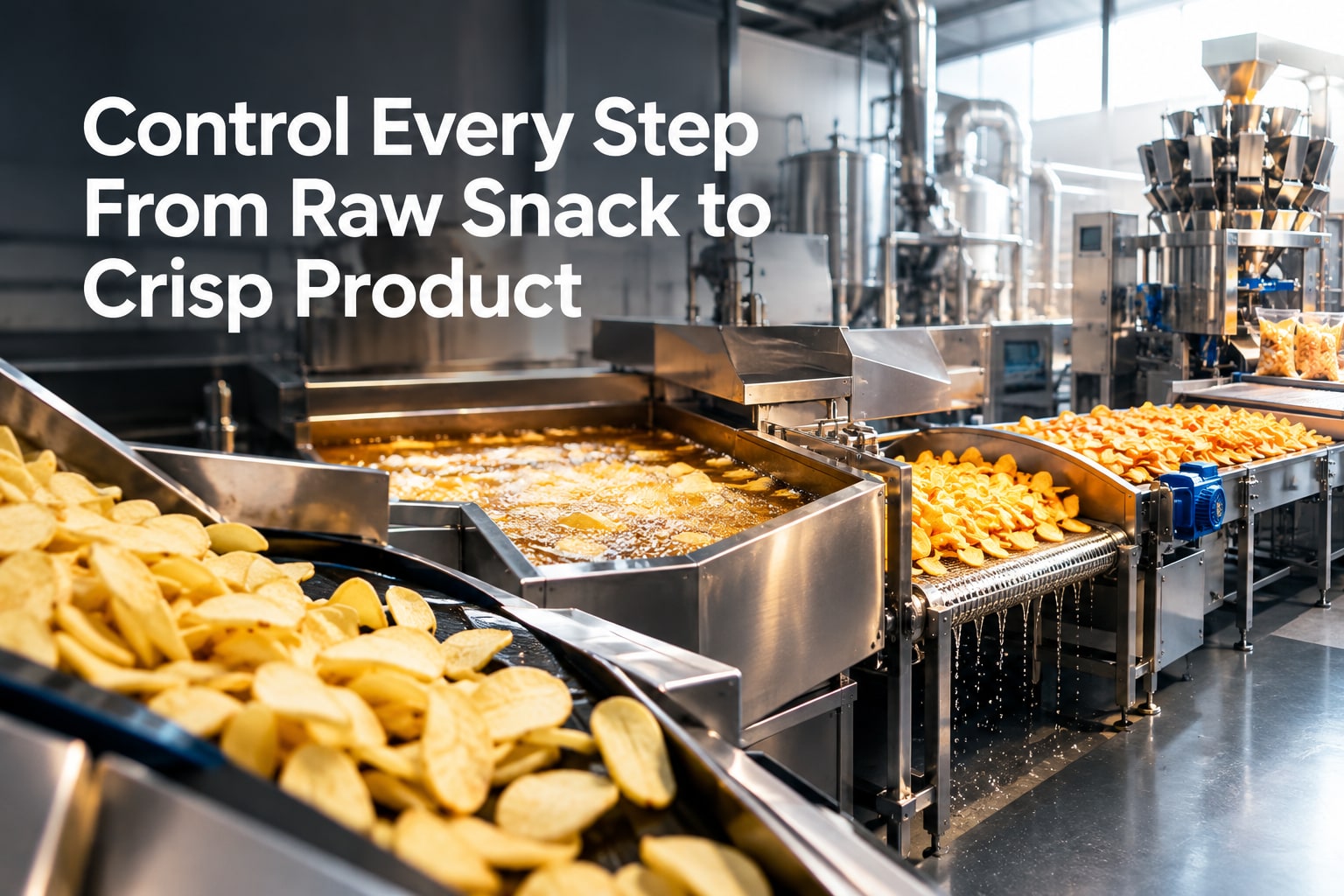
The fryer must also connect to oil filtration, de-oiling and cooling. Product leaves the oil into a drain section, then passes to a de-oiler before cooling; packing it hot traps condensation and softens the crust. Batch equipment is the better choice when recipe flexibility matters more than uninterrupted output.
How de-oiling, oil care, cooling and packing protect quality
Excess oil is controlled after frying, not by extending the fry. Send the product through a vibratory de-oiler or centrifugal spinner sized for the snack’s shape; excessive vibration breaks fragile pieces, while insufficient residence time leaves a greasy surface. Return recovered oil through a filter before it reaches the fryer.
Oil care prevents foaming and burnt flavours. Remove crumbs and fines continuously, skim carbonised particles, and filter at the supplier’s specified rate. Water, detergent residue and heavy crumb loads trigger foam. Track oil temperature, colour, odour and free fatty acid results, and replace oil when your food-safety plan sets a limit.
Use this sequence after frying:
- De-oil immediately while the surface oil remains mobile.
- Inspect for dark particles and remove damaged pieces before seasoning.
- Apply seasoning only after de-oiling, using a metered tumbler or feeder; excess oil makes powder clump, while overheated seasoning develops burnt notes.
- Cool on a perforated conveyor with filtered air until the product and package room are close in temperature.
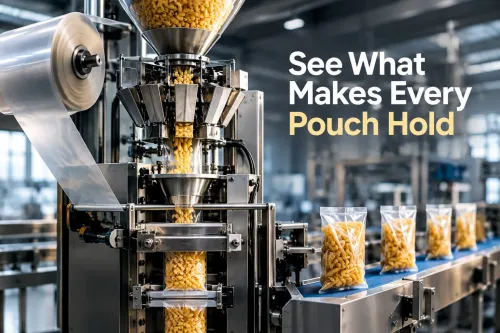
- Pack only after cooling capacity matches product mass, package rate and ambient humidity.
Packing hot snacks traps vapour. It condenses on the film, softens crisp texture and shortens shelf life. A commercial fryer machine therefore needs a matched de-oiler, cooler and packing line, not just a large oil vat. Confirm outlet temperature and moisture during a full-rate trial.
How to specify and verify a fryer before buying it
A quotation claiming 100 kg/h is not comparable until it names the product, inlet moisture, outlet moisture, oil temperature and residence time. Use those figures to compare a snack frying machine in Nashik, not its oil volume or nominal capacity.
1. Give the supplier a tested product specification: piece size or thickness, bulk density, feed rate, target final moisture, oil depth, temperature range and required kg/h. Request separate results for each snack you will produce.
2. Ask for a complete utility schedule covering heating fuel or electrical load, connected load, compressed-air pressure, exhaust volume, cooling-water demand and floor space. Confirm oil filtration, crumb removal, drain points, access for cleaning and the cleaning method.
3. Require drawings and records before ordering: general-arrangement and process-flow drawings, electrical load list, food-contact material certificates, operating and maintenance manuals, calibration certificates, spare-parts list, safety guards and emergency-stop details. Include an oil-testing procedure that records Total Polar Compounds; FSSAI limits used oil to 25% TPC.
4. Write an acceptance test into the purchase order. Run your actual raw material for a defined period and record kg/h, oil temperature, residence time, energy use, outlet moisture, colour, oil uptake, fines, temperature recovery and cooling time before packing. Reject results outside agreed limits.
Ask Khan Engineering and Foods Processing Machine to state these figures for each proposed batch or continuous configuration, rather than presenting one capacity figure for every product. Keep the signed test report with the commissioning documents.
Related products
 | Frying Machines Perfect for Small to Mid-Scale Snack Production Khan Engineering’s Batch Fryer Machine is a reliable and efficient solution for frying a wide range... View product → |
 | Fryer Machine A fryer machine is an essential kitchen appliance designed for deep frying various food items. View product → |
Frequently asked questions
How should raw snacks be prepared before entering a fryer?
Use uniform pieces, control thickness, remove excess surface water and clear loose flour or coating that could cause splashing, patchy colour and excess oil uptake.
How do you set frying conditions for a crisp snack?
Match oil temperature, frying time, product load and final moisture target to the specific snack, then verify results through colour, texture, weight and moisture checks.
What is the difference between batch and continuous frying?
Batch frying cooks a measured load for a defined time, while continuous frying moves product through the fryer at a controlled feed rate and residence time.
How do de-oiling, oil care and cooling protect snack quality?
De-oiling removes surface oil, filtration removes crumbs, controlled oil replacement limits degradation, and cooling before packing prevents condensation and loss of crispness.
What should you verify before buying a commercial fryer machine?
Check rated throughput, usable frying area, temperature uniformity, residence-time control, filtration, de-oiling, safety devices, cleanability, utilities and documented test results.
Related product
 | Snacks Making Machine Khan Engineering offers a high-performance Namkeen Making Machine designed for smooth, hygienic, and efficient commercial snack production. View product → |