Choosing the right pasta making machine for commercial production requires more than comparing machine prices or advertised production capacities. Food manufacturers need equipment that matches their product range, production targets, raw material requirements, quality expectations, and long-term business plans.
Whether you are starting a new pasta manufacturing business, expanding an existing food factory, or establishing an industrial pasta production line, the right machinery can help streamline production and maintain consistency across batches.
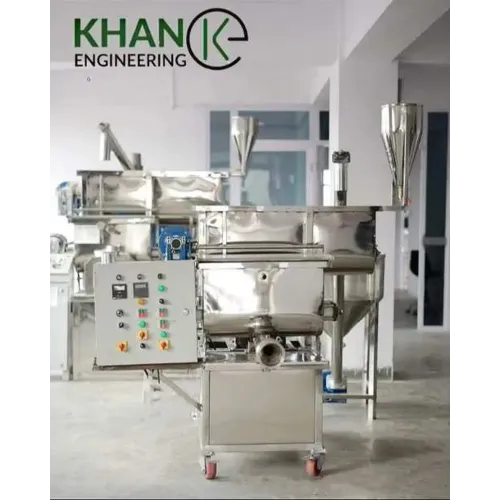
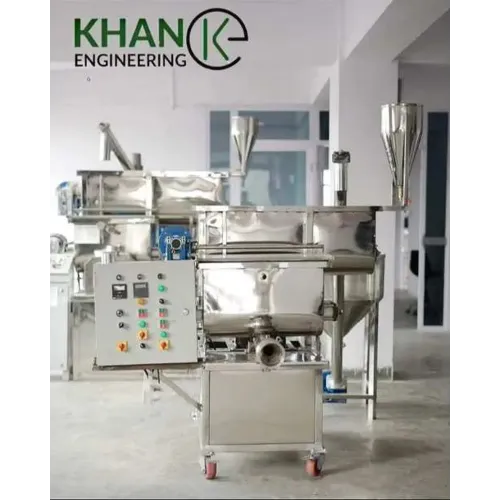
Khan Engineering & Food Processing Machine, based in Noida, India, manufactures pasta-making machinery for commercial and industrial applications. With experience in food-processing equipment, pasta production systems, and plant installations, the company helps buyers evaluate machinery options according to their production requirements.
1. Identify the Type of Pasta You Want to Manufacture
Before selecting a machine, determine which pasta products you plan to manufacture. Different pasta shapes require suitable dies, forming arrangements, and processing configurations.
If your business focuses on macaroni, penne, fusilli, shells, or elbow pasta, choose equipment that supports the required shapes and sizes. Manufacturers producing spaghetti or vermicelli should evaluate machinery designed for long-cut products and their specific cutting and handling requirements.
If you intend to supply multiple product categories, discuss interchangeable dies and changeover requirements with the manufacturer. This can help you evaluate whether one machine configuration can support your product portfolio or whether separate production equipment is necessary.
2. Select the Right Production Capacity
Production capacity is one of the most important factors when purchasing a commercial pasta making machine. Your selected capacity should reflect actual customer demand, planned operating hours, and future expansion.
A smaller commercial unit may be suitable for a new business supplying local retailers, restaurants, or regional distributors. Established food manufacturers serving larger markets may require higher-capacity machinery or an integrated pasta production line.
For example, Khan Engineering lists pasta machinery configurations with capacities ranging from approximately 50 kg per hour to 1, 000 kg per hour, depending on the model and application. Buyers should confirm the applicable specifications, operating conditions, and achievable output for their intended product before placing an order.
When calculating production requirements, consider the complete manufacturing process rather than the extruder alone. Drying, cooling, handling, and packaging can affect the final output of the production line.
3. Choose Between Semi-Automatic and Fully Automatic Machinery
The appropriate automation level depends on your budget, production volume, labour availability, and operating preferences.
A semi-automatic pasta making machine may be appropriate for businesses that prefer a more flexible setup and can manage certain production activities manually. A fully automatic system may be better suited to manufacturers seeking a more integrated workflow and higher-volume production.
When comparing options, ask about dough feeding, extrusion controls, cutting arrangements, material handling, drying integration, and packaging compatibility. Evaluate how much operator involvement each configuration requires and whether your team can operate and maintain the equipment effectively.
The goal is to choose an automation level that supports your production plan without introducing unnecessary complexity or investment.
4. Evaluate the Pasta Extrusion System and Die Options
The extrusion system influences how the dough is processed and shaped into the required pasta profile. The suitability of the machine depends on factors such as dough formulation, consistency, processing conditions, and the product specifications.
Before purchasing, confirm which pasta shapes the machine can produce, the available die options, and how easily dies can be changed for different products. Ask the manufacturer about die materials, cleaning procedures, maintenance requirements, and the availability of replacement parts.
If you plan to manufacture several pasta varieties, flexibility in product changeovers can be an important factor in your equipment selection.
5. Consider Drying and Moisture Control Requirements
For manufacturers producing dried pasta, drying is a critical part of the production process. The drying system must suit the pasta shape, product thickness, moisture level, and required finished-product characteristics.
Incorrect drying conditions can contribute to cracking, deformation, uneven moisture, and inconsistent product quality. Therefore, buyers should evaluate the drying equipment alongside the pasta extruder rather than treating it as a separate afterthought.
Discuss the intended

Noida
08048034350
+919268742208
 Chat with us
 Chat with us